Always an important issue for documentarians – blog post from the NFB by Jovana Jankovic


-
Join 30 other subscribers
-
Recent Posts
Archives
Categories
Meta
-
Always an important issue for documentarians – blog post from the NFB by Jovana Jankovic
Joe Berlinger & Michael Moore on the changing market for documentary
Two topical posts in quick succession: first Michael Moore’s 13 Rules for Making Documentary Films issued at the Toronto International Film Festival’s sixth annual Doc Conference in September 2014, followed by Joe Berlinger’s response and thoughts on the “Golden Age of Documentaries”
For those interested in the history of documentary in GEECT / CILECT we have updated the Themes section to include Chap Freeman’s history of the VISIONS project since 1993, as well as texts on documentary by Rolf Orthel and Colin Young.
Food for thought on the journey to Wales!
Just a quick update to remind everyone that although registrations are still open, places are filling up. Also we are about to close proposals for “Best Kept Secrets” and the longer presentations on Friday morning, so these need to be in by the end of this week – September 19th.
Registration forms should be filled out and submitted directly to geectdoc[AT]southwales[DOT]ac[DOT]uk
For those wishing to pay by bank transfer, please contact Stacy Cutts at the above email address. Also to save on bank charges for EUR(€) to GBP(£) transactions, we strongly recommend use of Transferwise https://transferwise.com
Most readers of this blog will have seen the recent poll by the British Film Institute which can be accessed variously as the Critics’ 50 Greatest Documentaries of All Time, the Filmmakers’ Greatest Documentaries of All Time or the interactive combined poll of both. Many familiar titles, some surprises – and for entertainment, check out James Benning’s sole nomination.
Five books to add to your reading list: three explicitly on the subject of teaching documentary, and one – the most recent – on the history of the film school. The two oldest titles are out of print, but you may still find them second hand.
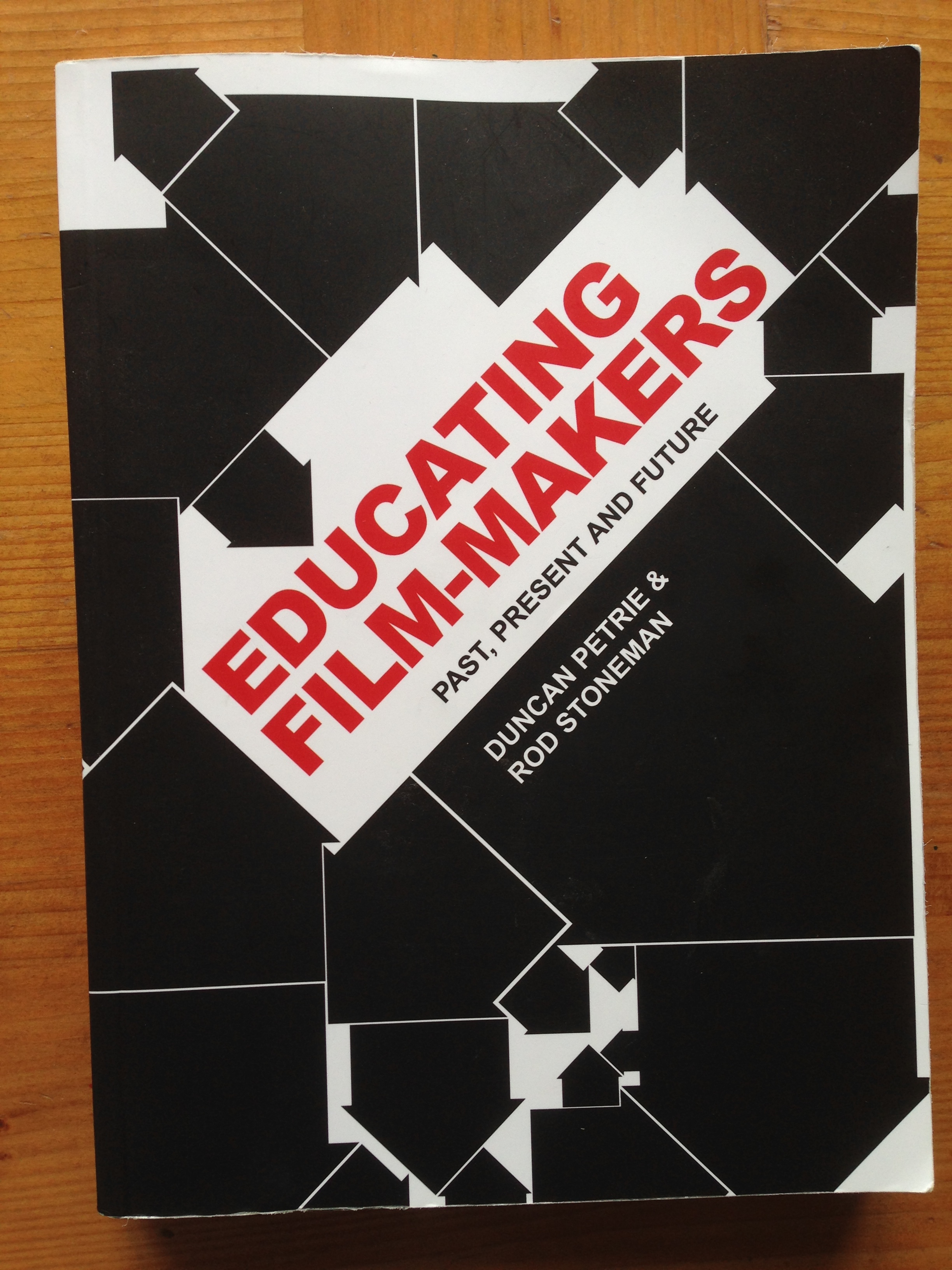
Educating Filmmakers by Duncan Petrie & Rod Stoneman (2014).
A book in two halves: in the first Duncan Petrie offers a well-researched but selective history of the film school in the US and Europe, focusing on the main institutions and their relationships to the industry. The second half, a conceptual polemic by a former commissioning editor at Channel 4 and the Irish Film Board, asks pertinent questions where the modern film school is heading.
Dokumentarfilm: Schulen, Projekte, Konzepte Ed: Edmund Ballhaus (in German, 2013).
This title represents an overview of the various approaches of all the major German-speaking film schools in Germany, Austria and Switzerland.
The Education of the Filmmaker in Africa, the Middle East, and the Americas Ed: Mette Hjort (2013).
Looking at filmmaking in countries such as Nigeria, Qatar, the United States, the West Indies, this title investigates the nature of practice-based film education in well-established film schools as well as studios, clubs, film festivals, NGOs and peripatetic workshops.
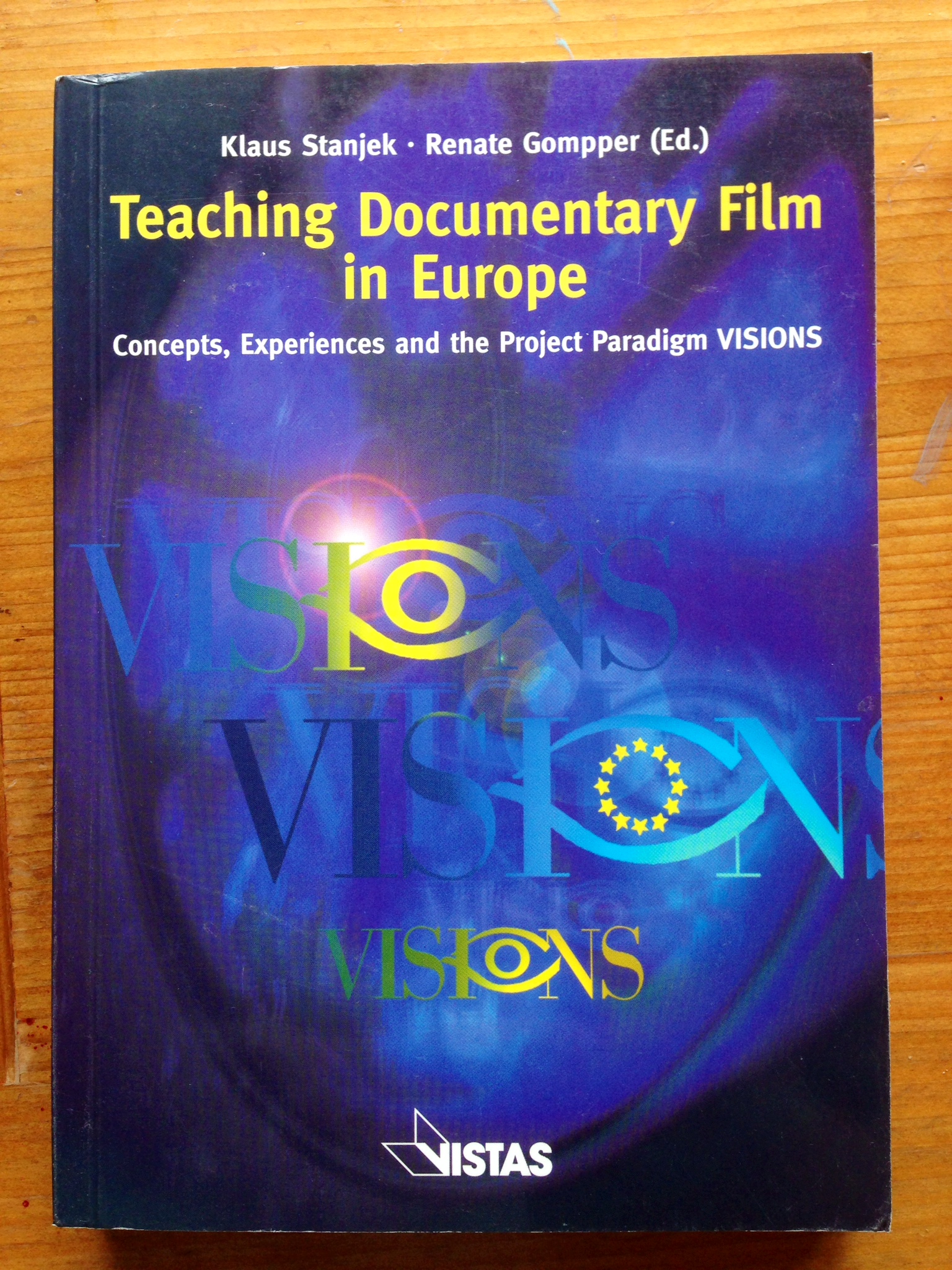
Teaching Documentary in Europe Eds: Klaus Stanjek & Renate Gompper (German & English Edition, 1994).
A reader created after the first VISIONS model project – a cycle of theoretical and practical seminars held at HFF “Konrad Wolf” in Potsdam Babelsberg in 1994. Contains a useful list of exercises and practical examples.
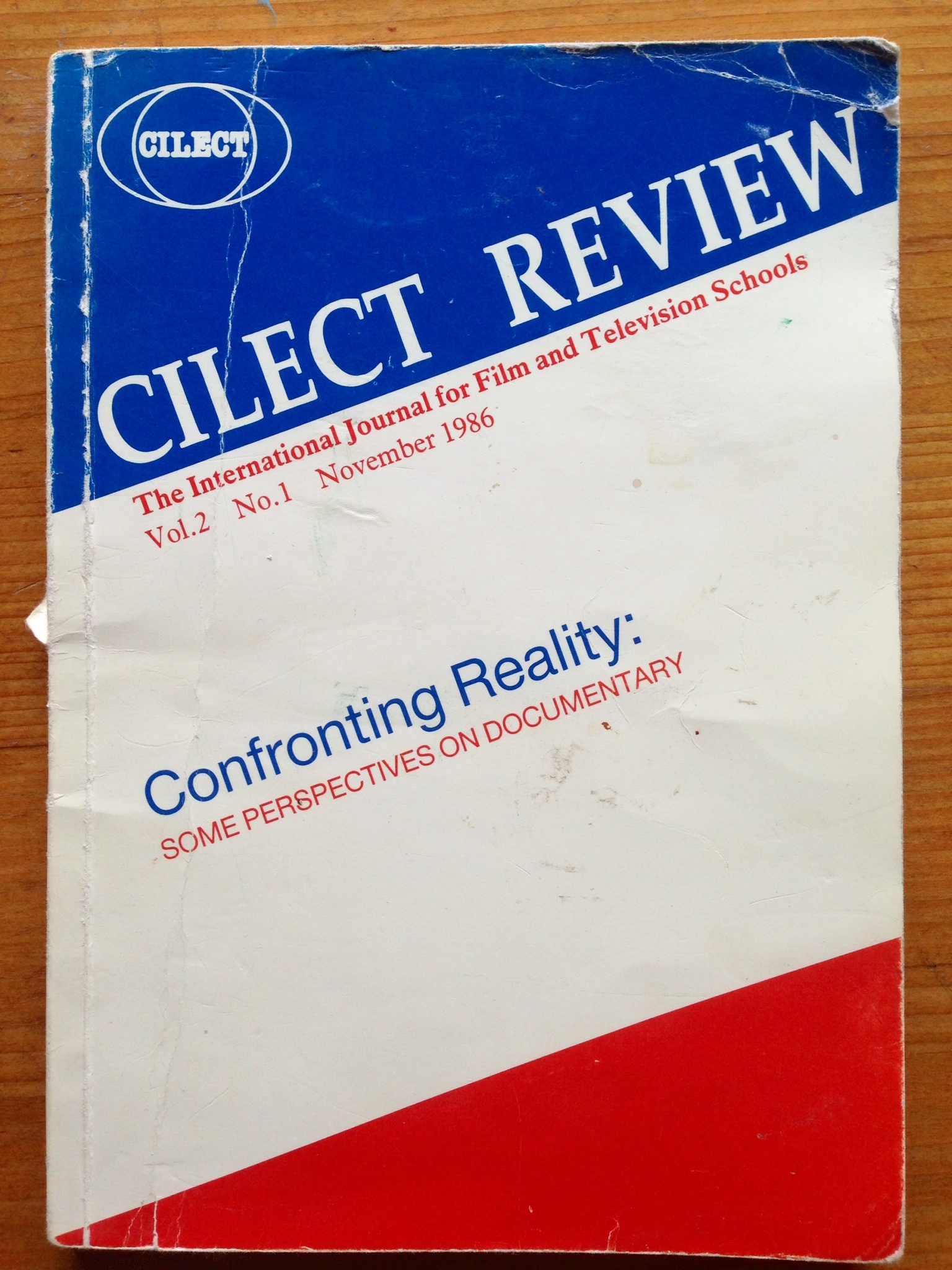
Confronting Reality (CILECT Review Vol. 2 No. 1, November 1986).
Starting with a series of “Personal Perspectives” by familiar names such as Ricky Leacock, Dai Vaughan and Jean Rouch, the second part of this journal explores “Formal, Ethical and Other Considerations” in a selection of pieces on film teaching in individual schools by filmmaker/teachers such as David MacDougall (Canberra) and Kazimierz Karabasz (Lodz).
The appendix “A Provocation” by Colin Young, founder of the NFTS and former President of CILECT, starts thus:
The word documentary has different meanings in different parts of the world. In what follows, we begin by proposing two distinctions.
- Documentary and fiction are not the same thing (although they overlap and have much in common)
- Documentary and film or television journalism are not the same thing (although they both are aspects of non-fiction).
Food for thought…discuss!

Doc Alliance is a creative partnership of 7 key European documentary film festivals: CPH:DOX Copenhagen, DOK Leipzig, FID Marseille, Jihlava IDFF, Planete Doc Film Festival, Visions du Réel Nyon & Doclisboa.
The online portal DAFilms.com is an online distribution platform for documentary and experimental films focused on European cinema. For a small fee, it offers over 1000 films for streaming or legal download. The portal presents regular film programmes of diverse character ranging from archive historical films through world retrospectives of leading world filmmakers to new premiere formats.
From July 21 to August 3 2014 you can watch films by current students of the documentary department of Prague’s celebrated FAMU film school – more details on the season here
Here’s the overview of the programme – your input requested for the two open slots on the Friday and “Best Kept Secrets”
Wednesday November 5th
Thursday November 6th (Atrium, USW)
Friday November 6th (Atrium, USW)
We’re delighted to report that the National Association for the Moving Image in Higher Education (NAHEMI) has just come on board with financial support for the symposium.
NAHEMI connects UK courses which focus on creative practice and “…acts as a forum for debate on all matters pertaining to the teaching of practice in the Moving Image in Higher Education including the theory and history underpinning these practices.”
Their annual “Talking Shop” and “Eat Our Shorts” student film festival are already firm dates on the calendar, so it’s natural that NAHEMI is also supporting “Teaching Documentary” Symposium.
At long last the revised programme for November is available as a PDF to download. Registration details to follow shortly on this website.
Don’t forget to send us proposals for the two vacant sessions as well as your suggestions for the ever-popular “Best Kept Secrets” (deadline: September 8th).